
Choose your new home EV charger.
Take a look at our best sellers.


Can't find the chargeryou're looking for?
We can supply and install any charger of your choice.
Additions.


Need a custom quote?Tell us about your project.
Faq
Home EV Charger FAQs & Advice
Switching to an electric vehicle is a big step, but getting your home charger installed shouldn’t be complicated. We’ve answered the most common questions about installation times, smart tariffs, solar integration, and technical requirements below to help you make the right choice for your home.
A standard home EV charger installation typically takes between 2 to 4 hours. On the day, our installers will mount the charging unit, run and clip the necessary cabling to your main consumer unit, make all electrical connections, and carry out full safety testing. Before leaving, we will also help set up the charger’s smartphone app and walk you through how to start your first charging session.
Not always, but it depends on your current setup and electrical safety regulations (BS 7671):
-
Surge Protection Device (SPD): Under 18th Edition Wiring Regulations, surge protection is generally required for new EV installations to protect both your property’s wiring and your vehicle’s sensitive electronics from voltage spikes. If your current consumer unit doesn’t have an SPD, we can often install a small inline SPD enclosure next to it without replacing the main board.
-
Consumer Unit Upgrade: A full upgrade is only necessary if your existing fuse board lacks spare ways, lacks proper RCD protection, or is too outdated to safely handle the additional continuous electrical load of an EV charger. We assess this during our initial site or video survey.
Yes. Choosing a solar-compatible smart EV charger allows you to charge your vehicle directly using surplus electricity generated by your solar panels. These chargers use CT clamps to monitor your energy export; when excess solar generation is detected, the charger diverts that free energy straight into your car rather than sending it back to the grid. Most units offer modes that let you choose between 100% green solar charging or fast grid charging when you’re in a hurry.
A standard installation covers the vast majority of residential setups where minimal cable routing and standard electrical capacity are present. Typically, a standard installation includes:
-
Mounting the charger to a solid main wall (brick or masonry).
-
Up to 10 metres of surface-mounted cable neatly clipped from the consumer unit to the charger.
-
Routing cable through a single external wall.
-
Connection to a modern consumer unit with compatible spare capacity.
-
Full electrical testing, commissioning, certification, and app setup.
Note: Non-standard work includes extensive cable runs (over 10m), ground works/trenching through garden beds or driveways, main supply/fuse upgrades, or installing dedicated sub-consumer units.
Almost all major energy suppliers (including Octopus, British Gas, E.ON, OVO, and EDF) now offer dedicated EV tariffs designed for home charging. These tariffs give you access to heavily discounted off-peak electricity rates, often around 7p to 9p per kWh overnight, compared to standard daytime grid rates.
At 7-9p per kWh, charging an EV equates to roughly 2p per mile in running costs (compared to 15-25p+ per mile for a petrol or diesel car).
-
Standard Off-Peak Tariffs (e.g. Octopus Go): Provide a fixed set window of cheap electricity overnight (e.g. 12:30 AM to 5:30 AM). You simply schedule your charger via its app to operate during these hours.
-
Dynamic Smart Tariffs (e.g. Intelligent Octopus Go): Pair directly with compatible chargers or vehicles. You tell the app what battery percentage you need by the morning, and your supplier automatically schedules the cheapest, greenest slots for you to charge—often extending your cheap rate window beyond the fixed overnight hours.
-
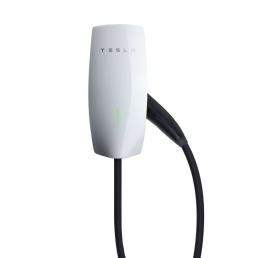
Tethered: Features an attached charging cable (usually 5m–7.5m) permanently wired into the unit.
-
Pros: Maximum convenience—simply grab the plug and insert it directly into your car without fetching a cable from your boot.
-
Cons: Looks slightly bulkier on the wall.
-
-
Socketed (Untethered): Features a clean plug socket on the front, requiring you to plug in your own Type 2 cable.
-
Pros: Neat, minimalist appearance on your wall, and compatible with any cable type or vehicle.
-
Cons: You need to unpack and plug in your own cable every time you want to charge at home.
-
EV charger installs within a 50 mile radius of Peterborough. Cambridgeshire, Huntingdonshire, Rutland, Leicestershire, Lincolnshire, Northamptonshire, Bedfordshire, Hertfordshire, Nottinghamshire, Norfolk, Buckinghamshire, Oxfordshire, Essex, Suffolk.
"Standard installation coverage: 50-mile radius from Peterborough. If your address falls outside this zone, please contact us directly for custom project quotes."
Power up your EV at home.What are you waiting for?
Book your free on site assessment & quotation.